You have tried the expensive shampoo. The one your colleague swore by—the serum from the pharmacy. Perhaps the clinic's treatment costs more than you expected.
And you are still finding hair on your pillow every morning.
If that sounds familiar, you are not imagining it — and you are not alone. Hair loss in Singapore affects far more people than they openly admit. The physical change is one thing. But most of our customers tell us the hardest part is the confidence. The way you style your hair has changed—the angles you avoid in photographs. The small daily decisions remind you that something has changed.
Here is what we have learned in over 15 years of treating scalp conditions in Singapore: most people are not using the wrong product because they made a bad choice. They are using the wrong product because the right information was never made available to them.
A herbal scalp tonic can help — but only if it targets the right problem. Most products treat the hair. A good herbal hair and scalp treatment targets the scalp, where hair loss begins.
A scalp tonic is a leave-in treatment applied directly to the scalp after washing. It is not rinsed out.
Shampoo cleans the scalp for roughly 60 seconds, then drains. A herbal scalp tonic stays on the scalp for hours. That means active ingredients have time to penetrate the skin and reach the hair follicles.
This matters because hair loss starts in the follicle, not the strand. The scalp requires sustained treatment—not a quick rinse.
Think of shampoo as washing your face. A scalp tonic is the serum you apply afterwards. The serum does the real work.
This is also why switching shampoos rarely fixes hair loss. You are addressing the surface when the problem is deeper.
Understanding why you are losing hair helps you choose the right scalp care solution. There are three main causes of hair loss in Singapore.
DHT (dihydrotestosterone) is a hormone your body produces naturally. When too much of it binds to scalp follicles, they shrink. Hair grows back thinner and shorter each cycle. Eventually, the follicle stops producing hair altogether.
A study in the Journal of Investigative Dermatology confirmed that DHT sensitivity at the follicle level is the primary driver of androgenetic alopecia — the most common form of hair loss in both men and women. If one or both of your parents experienced thinning hair, DHT is likely involved for you as well. But hereditary hair loss is not a life sentence. DHT inhibition can slow follicle miniaturisation and, with consistent treatment, support recovery of dormant follicles before they are permanently lost. The earlier you address it, the more you preserve.
Singapore's humidity causes the scalp to produce more oil than average. When sebum builds up around the follicle opening, it creates an environment that hinders hair growth. It also triggers inflammation, which damages the follicle over time.
This is why oily scalp treatment in Singapore is so closely linked to hair loss management. The two problems feed each other — and treating only one rarely resolves either.
Hair follicles need a constant supply of oxygen and nutrients delivered through blood flow. Stress, long hours at a desk, and a poor diet all reduce circulation to the scalp. When follicles are undernourished, they produce weaker, finer strands.
This is one reason hair thinning in Singapore is increasingly common among working adults in their 30s, not just older generations.
Not all scalp tonic treatments are the same. The most effective ones use botanical compounds that target specific mechanisms—not just fragrance and alcohol.
This is what separates a proper herbal hair scalp treatment in Singapore from a generic drugstore product.
Ms. Nancy, our founder and a hair care specialist with over 30 years of experience, built our tonic formulations around herbs she saw produce consistent, documentable results in her practice. She did not choose these ingredients because they were popular. She chose them because they worked — and the research now supports what TCM practitioners observed long before modern studies confirmed it.
Ginger stimulates blood microcirculation in the scalp. A study in Planta Medica found that ginger extract increased dermal papilla cell activity — these are the cells responsible for initiating and maintaining hair growth. It also reduces the scalp inflammation that quietly damages follicles over time.
Research in the Journal of Medicinal Food found that ginsenosides — the active compounds in ginseng — promoted hair shaft elongation and extended the anagen phase of the hair cycle. In plain terms, ginseng keeps your follicles in growth mode for longer. It is among the most studied herbs in natural hair growth treatments.
Research published in the Journal of Ethnopharmacology found that Polygonum multiflorum extract promoted hair growth by activating the Wnt/beta-catenin signalling pathway — the same pathway involved in hair follicle cycling. It also inhibits 5-alpha reductase, the enzyme that converts testosterone into DHT.
This makes it one of the most relevant herbs for herbal hair loss treatment in Singapore, particularly for anyone dealing with pattern hair loss or a family history of thinning.
Dang Gui improves peripheral blood flow. For the scalp, this means better nutrient delivery to follicles. It has been used in TCM scalp care for over 2,000 years — not as a trend, but because practitioners documented results across generations. A review in the Chinese Journal of Integrative Medicine noted its role in improving scalp microcirculation and hair quality.
This is the part most people never hear — and it explains why so many people give up on scalp tonics after one try.
Hair loss has two phases that need separate treatment. Using a single product to address both is like trying to grow a garden without first clearing the weeds or preparing the soil.
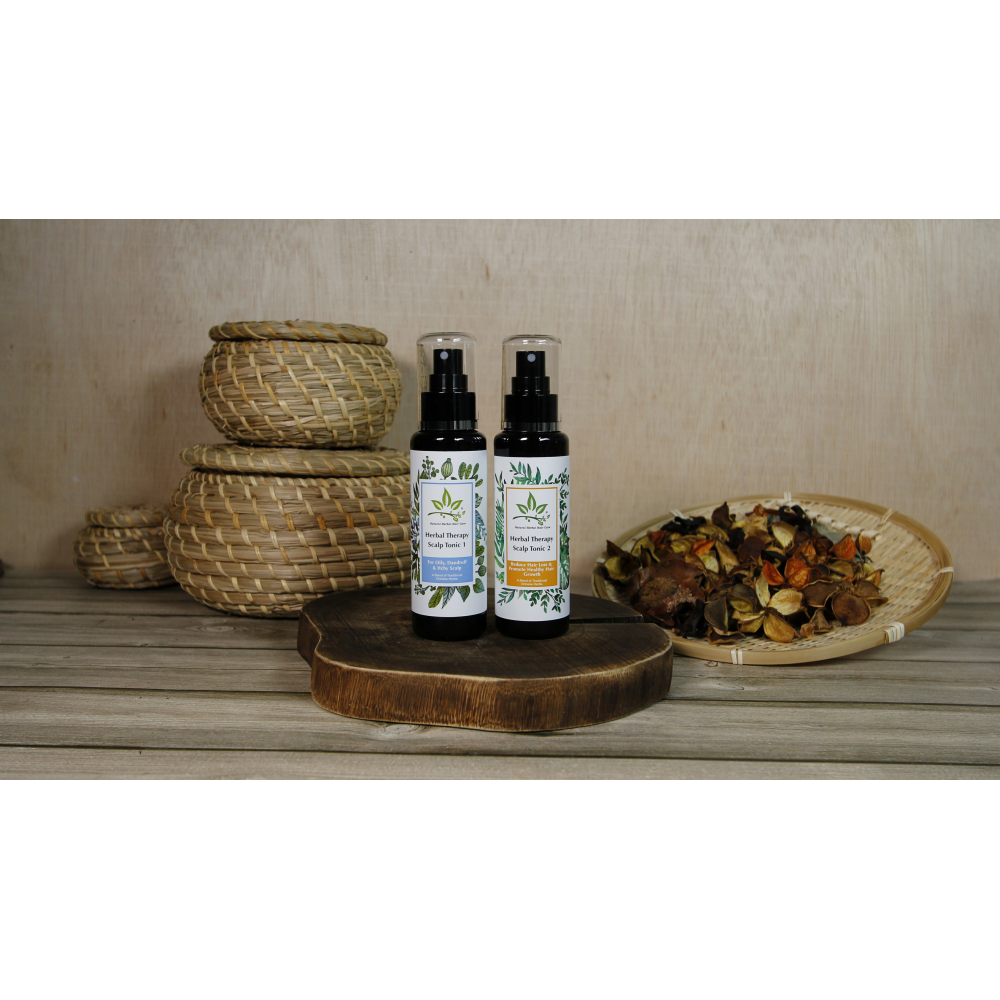
One of our customers, Priya, a woman in her late 30s from Tampines, came to us after spending over two years trying different hair tonics from pharmacies and online stores. None of them worked. When we assessed her scalp, the issue was clear: she had significant sebum buildup blocking her follicles. No growth-activating tonic could penetrate properly. She needed to clear the environment first. By week four of using both Tonic 1 and Tonic 2 together, her shedding had reduced noticeably. By month three, she had visible new growth at her hairline for the first time in years.
That is the principle behind our two-step system.
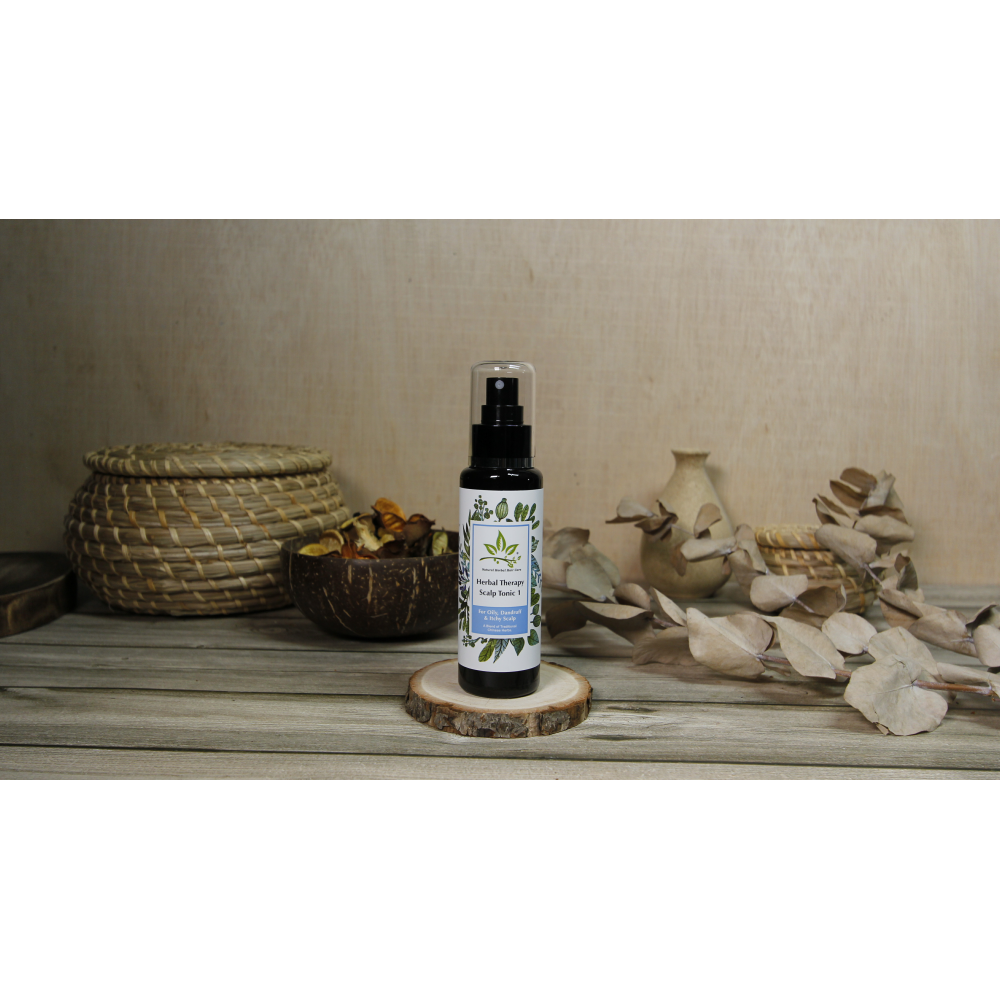
Step one is about clearing and balancing. Excess sebum, inflammation, and follicle blockage must be addressed before any growth-activating ingredient can work. Tonic 1 handles this — it controls oil, soothes irritation, and prepares the scalp.
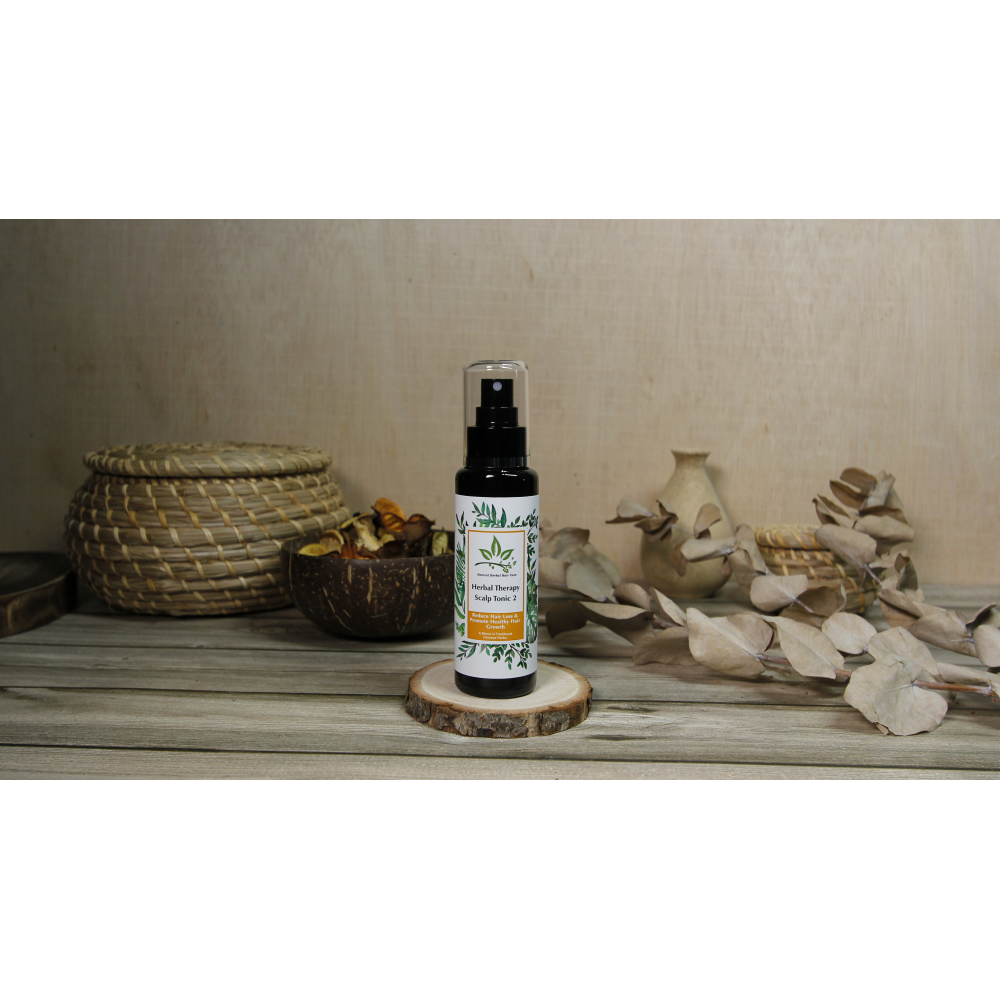
Step two is about activating. Once the scalp is clear, Tonic 2 goes to work — inhibiting DHT, extending the anagen phase, and stimulating circulation at the follicle level.
Using both in sequence mirrors the TCM approach of removing obstruction before tonifying. It is also why customers who use both Tonic 1 and Tonic 2 together consistently report better results than those who use either one alone.
If you have tried a scalp tonic before and saw no results, there is a good chance the environment was not ready to receive it.
Most people apply a scalp tonic incorrectly. They pour it onto their hair or rub it in too quickly. Here is the right way to use a herbal scalp treatment, particularly in Singapore's climate, where sweat and humidity affect absorption.
Wash your hair with a mild, sulphate-free shampoo. Leave it on the scalp for 60 seconds, then rinse.
Towel-dry to damp — not dripping. Too much water dilutes the tonic and reduces absorption.
Section your hair and apply the scalp tonic in lines directly to the scalp. It is a scalp treatment, not a hair conditioner.
Massage with your fingertips in slow circular motions for 3 to 5 minutes. This improves blood circulation and drives the active ingredients deeper into the skin. Do not rush this step.
Leave it in overnight. Apply before bed so the herbs work while you sleep.
Use it every day. Hair grows at roughly 1.25 cm per month. Results take time and consistency.
Many of our customers come to us having already lost faith in hair care products. We understand why. Here is an honest timeline—not a promise, but what consistent daily users typically report.
| Timeframe | What You May Notice |
| Week 1 to 2 | Less scalp itch, reduced oiliness, and a cooling sensation after application |
| Week 3 to 4 | Less hair fall in the shower and on your pillow |
| Month 2 to 3 | Visible reduction in shedding, early new growth at the hairline |
| Month 3 onwards | Stronger, thicker strands with continued daily use |
One customer described noticing less hair on her pillow at week three and crying — not because of the hair, but because it was the first time in two years something had actually worked.
Skipping applications extends the timeline significantly. Consistency is the single biggest factor in any herbal hair loss treatment programme.
Yes, provided it is free of the most common irritants. This is especially important for scalp care in Singapore, where sensitivity and allergic reactions to synthetic hair products are widely reported.
Some of our most loyal customers first came to us because they could no longer tolerate chemical dyes or standard salon treatments. Their scalps were inflamed, reactive, and exhausted from years of harsh ingredients. A clean, herbal formulation was the first thing that did not make things worse—and eventually the thing that made them better. If you still want to colour your hair without scalp reaction, our Herbal Hair Colouring range was developed specifically for this—no ammonia, no burning, and no compromise on colour quality.
Watch out for SLS and SLES (they strip the scalp barrier), parabens (linked to skin sensitisation), silicones (build up over time and block follicles), and synthetic fragrances (a frequent cause of contact dermatitis).
A herbal scalp tonic free from all four is suitable for most sensitive scalps. Always do a patch test on the inner arm 24 hours before applying to the scalp for the first time.
A herbal scalp tonic works well for the most common causes of hair loss. But some situations need professional assessment before starting any scalp treatment.
See a trichologist or TCM practitioner in Singapore if you notice sudden patchy hair loss, scalp sores or crusting, or if you have been using a scalp tonic daily for six months with no improvement. Hair loss that starts after surgery, illness, or a new medication also warrants a proper consultation.
Our location at Blk 38 Defu Lane 10, Singapore, offers in-clinic scalp treatment sessions that combine professional scalp washing, tonic application, and a 30-minute herbal steam session for deeper penetration. This is particularly helpful for clients in Singapore experiencing significant hair thinning who want faster, early results before committing to a home routine.
Many clients are referred to us by hairstylists who have seen the results first-hand. If someone you trust referred you to us, that is usually why.
Visit our Treatment page to learn about the in-clinic process or book a consultation.
Herbal scalp tonics work when they use the right ingredients, are applied correctly, and used consistently over time.
But beyond the science, here is what 15 years of working with Singaporean customers has taught us. Hair loss is rarely just about hair. It affects how you carry yourself. How confident do you feel walking into a room? How freely you live your day.
The customers who stay with us are not just chasing thicker strands. They are reclaiming something they felt they had lost. And that is what Ms. Nancy built this brand to do — give people a natural, honest solution that actually works, without chemicals, side effects, or false promises.
DHT, excess sebum, and poor circulation are the three causes worth addressing with a proper TCM scalp care routine. Ginger, ginseng, He Shou Wu, and Dang Gui all have peer-reviewed research supporting their role in scalp health.
A two-step approach — balance the scalp first, then activate growth — outperforms any single-product routine. Results require at least 8 to 12 weeks of daily use.
Explore our full TCM-formulated herbal scalp tonic range made in Singapore on our Scalp Tonic page, or learn more about the 4-Step Treatment System for a complete home care routine.
Yes — and Singapore's climate actually makes a good herbal scalp tonic more necessary, not less. High humidity increases sebum production, which clogs follicles and creates the inflammation that accelerates hair loss. A scalp tonic formulated for oily scalp treatment in Singapore directly addresses this. Many Singaporeans find that their scalp condition worsens in the warmer months precisely because standard products cannot keep up with the excess oil their scalp produces year-round.
Our Herbal Therapy Scalp Tonic is available online at naturalherbalhaircare.com.sg and in person at our clinic at Blk 38 Defu Lane 10, #03-15, Singapore 539215. We offer local delivery across Singapore, and the clinic is open by appointment for those who want a professional scalp-care consultation before purchase.
Yes. Our in-clinic TCM scalp treatment in Singapore at Defu Lane uses the same Tonic 1 and Tonic 2 formulas as the home range, but is performed by a trained specialist alongside a professional scalp wash and a 30-minute herbal steam session. The steam opens the pores and drives the herbal actives deeper into the follicle than home application alone. Many customers start with one or two clinic sessions to build a strong foundation, then maintain results at home using the scalp tonic system daily.
Most hair loss clinics in Singapore offer pharmaceutical options such as minoxidil or finasteride. These work through chemical intervention — minoxidil widens blood vessels, and finasteride blocks DHT production. TCM-based herbal scalp tonics work through botanical compounds that achieve similar mechanisms naturally. He Shou Wu inhibits 5α-reductase, the same enzyme finasteride targets, and ginger improves scalp circulation like minoxidil. The key differences are that herbal scalp treatments carry fewer reported side effects, are free from synthetic chemicals, and suit Singaporeans who prefer a natural approach or who have experienced irritation from pharmaceutical hair loss treatments. If your hair loss is severe or progressing quickly, consulting a dermatologist or trichologist in Singapore, along with using a herbal scalp tonic, is the most thorough approach.
Postpartum hair loss is extremely common and is caused by a sudden drop in oestrogen after delivery, which triggers a large number of follicles to enter the shedding phase simultaneously. It typically peaks around three to four months after birth. A DHT-inhibiting, circulation-stimulating herbal scalp tonic supports the scalp during this recovery period by prolonging the anagen phase and nourishing follicles back into active growth. Our scalp tonic formulas are free of SLS, parabens, silicones, and synthetic fragrances, making them a suitable natural hair loss treatment in Singapore for new mothers with sensitive scalps. We always recommend checking with your doctor first if you are breastfeeding, as a precaution when using any topical scalp treatment.